HomeAbout UsDonate Now

Trauma Informed Teaching Guide

Trauma-informed teaching isn’t about having all the answers. It’s about being informed about trauma and traumatic experiences, recognizing signs and impact and creating conditions where students feel safer and supported when trauma has been experienced. This guide outlines core principles and strategies to help educators respond with compassion, care and intention.

Trauma Informed Teaching Guide
Introduction

What is Trauma?

Trauma is “both the experience of, and a response to, an overwhelmingly negative event or series of events, such as interpersonal violence, personal loss, war or natural disaster. In the context of violence, trauma can be acute (resulting from a single event) or complex (resulting from repeated experiences of interpersonal and/or systemic violence)”. 1


Trauma-informed principles include recognizing trauma responses, promoting psychological safety, and applying trauma-sensitive communication (MHCC). 2

Trauma Informed Teaching Guide

How Common is Trauma?

The Hospital for Sick Children reports that more than half of teenagers (62%) have experienced a potentially traumatic event. These include:

  • physical abuse or assault
  • sexual abuse or assault (including trafficking)
  • psychological abuse or neglect
  • witnessing violence at home or in the community
  • bullying
  • a serious car or other accident
  • a natural disaster
  • a serious medical illness or procedure
  • sudden and/or violent loss of a loved one
  • refugee and war experiences.

For young people who have experienced early or repeated trauma, connection, support, and positive coping strategies can significantly support recovery and well-being. 3

“About 10% of adult Canadians state that as a child, they “witnessed violence by a parent or guardian against another adult in the home”

How Common is Trauma?

The Hospital for Sick Children reports that more than half of teenagers (62%) have experienced a potentially traumatic event. These include:

  • physical abuse or assault
  • sexual abuse or assault (including trafficking)
  • psychological abuse or neglect
  • witnessing violence at home or in the community
  • bullying
  • a serious car or other accident
  • a natural disaster
  • a serious medical illness or procedure
  • sudden and/or violent loss of a loved one
  • refugee and war experiences.

For young people who have experienced early or repeated trauma, connection, support, and positive coping strategies can significantly support recovery and well-being. 3

“About 10% of adult Canadians state that as a child, they “witnessed violence by a parent or guardian against another adult in the home”

Recognizing Trauma Responses to Violence

Stress and anxiety are natural responses to traumatic events, and for individuals directly impacted, these reactions can vary widely in intensity (MHCC). 4

Trauma can be recognized in young people in many different ways. While short-term distress after trauma is common, some students or staff may experience longer-term impacts that affect learning, attendance, relationships, and daily activities. Some common reactions, outlined by The Hospital for Sick Children, include:

  • being unable to stop thinking about what happened or trying not to think about what happened
  • difficulty sleeping
  • nightmares
  • uncomfortable physical sensations (such as a racing heartbeat, a knot in stomach, dry mouth, dizziness)
  • anxiety
  • sadness, anger or worry
  • difficulty concentrating 
  • tiredness or low energy
  • loss of interest in things you used to enjoy
  • thoughts of self-harm or suicide
  • substance use issues
  • guilt about parts of the traumatic event
  • difficulty trusting others or forming close relationships 5

These reactions are normal in the context of unusually distressing experiences. Healing and recovery timelines vary, and some responses may appear later. Educators and youth-serving professionals play an important role in recognizing some of these responses, compassionately naming the observations and inviting the student with appropriate support within the school health system or within the community.

Recognizing Trauma Responses to Violence

Stress and anxiety are natural responses to traumatic events, and for individuals directly impacted, these reactions can vary widely in intensity (MHCC). 4

Trauma can be recognized in young people in many different ways. While short-term distress after trauma is common, some students or staff may experience longer-term impacts that affect learning, attendance, relationships, and daily activities. Some common reactions, outlined by The Hospital for Sick Children, include:

  • being unable to stop thinking about what happened or trying not to think about what happened
  • difficulty sleeping
  • nightmares
  • uncomfortable physical sensations (such as a racing heartbeat, a knot in stomach, dry mouth, dizziness)
  • anxiety
  • sadness, anger or worry
  • difficulty concentrating 
  • tiredness or low energy
  • loss of interest in things you used to enjoy
  • thoughts of self-harm or suicide
  • substance use issues
  • guilt about parts of the traumatic event
  • difficulty trusting others or forming close relationships 5

These reactions are normal in the context of unusually distressing experiences. Healing and recovery timelines vary, and some responses may appear later. Educators and youth-serving professionals play an important role in recognizing some of these responses, compassionately naming the observations and inviting the student with appropriate support within the school health system or within the community.

Understanding Youth Behavior: The Developing Brain and Exposure to Violence

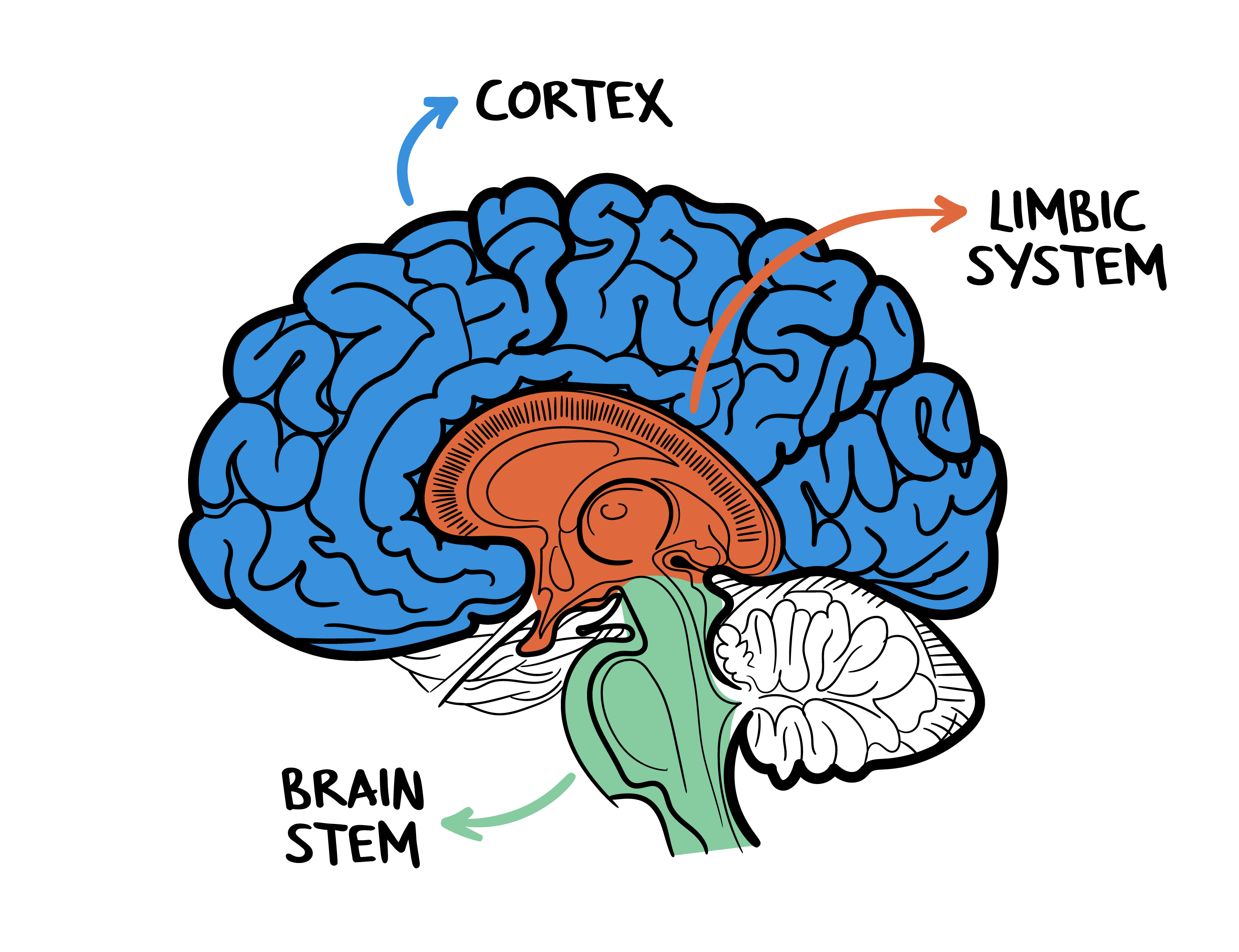
The youth brain continues to develop until they’re 25. The cortex, which controls reasoning and decision-making, develops last. This means they often react and feel before they think.

The brain first checks for safety. If a young person feels safe, they can think and make informed choices. If they feel threatened or out of control, their stress response activates, leading to fight, flight, freeze, or flock reactions. These are natural survival responses.

Trauma, adversity, and being stuck in survival can make young people anticipate and expect danger, so even small stressors may trigger strong reactions, reactivating trauma. These reactions aren’t intentional; they’re signs of a brain responding to perceived threat, not willful misbehaviour.

Ensuring your observations are informed helps educators respond without retriggering, offering support, skill-building, and guidance, rather than punishment and judgement. 6

Content adapted from the Nothing Heals Like Sport Playbook by the Center for Healing and Justice through Sport. © 2025 CHJS All Rights Reserved bit.ly/nhlsplaybook

Understanding Youth Behavior: The Developing Brain and Exposure to Violence

The youth brain continues to develop until they’re 25. The cortex, which controls reasoning and decision-making, develops last. This means they often react and feel before they think.

The brain first checks for safety. If a young person feels safe, they can think and make informed choices. If they feel threatened or out of control, their stress response activates, leading to fight, flight, freeze, or flock reactions. These are natural survival responses.

Trauma, adversity, and being stuck in survival can make young people anticipate and expect danger, so even small stressors may trigger strong reactions, reactivating trauma. These reactions aren’t intentional; they’re signs of a brain responding to perceived threat, not willful misbehaviour.

Ensuring your observations are informed helps educators respond without retriggering, offering support, skill-building, and guidance, rather than punishment and judgement. 6

Content adapted from the Nothing Heals Like Sport Playbook by the Center for Healing and Justice through Sport. © 2025 CHJS All Rights Reserved bit.ly/nhlsplaybook

Regulation, Dysregulation, and Co-regulation

What is Regulation?

Regulation is the ability to notice, manage, and respond to physical or psychological experiences in ways that support learning, connection, and decision-making. When individuals are regulated, they can access the prefrontal cortex, the part of the brain responsible for reflection, problem-solving, and self-control.

What is Dysregulation?

Dysregulation occurs when the stress or overwhelmed response is activated and the brain shifts to its lower, reactive systems. In this state, individuals may have difficulty thinking clearly, managing emotions, or responding flexibly. Behaviours may look impulsive, withdrawn, or emotionally intense, not because of choice, but because the brain is focused on survival. 7
Content adapted from the Nothing Heals Like Sport Playbook by the Center for Healing and Justice through Sport. © 2025 CHJS All Rights Reserved  bit.ly/nhlsplaybook

Why This Matters in Youth Settings

  • Stress and trauma make dysregulation more likely, especially for young people whose brains are still developing.
  • Learning, communication, and reflection are much harder when someone is dysregulated.

Behaviour is often a signal of a safety and regulation need, not a discipline issue.

What is Self Regulation?

Self-regulation is the ability to recognize and manage one’s emotions, thoughts, and physical reactions in ways that support learning, relationships, and daily functioning.

Self-regulation is not about “controlling” or suppressing emotions. It is about learning skills that help young people experience and respond to emotions safely and effectively. When young people are able to self-regulate, they can calm themselves, know when/how to ask for support, refocus attention, and make more informed choices, even during stress or re-activation.

Self-regulation develops over time and looks different for each individual. It is influenced by brain development, life experiences, and the level of support available. For many young people, especially those impacted by stress or trauma, these skills are still emerging and require practice and guidance.

According to Center for Instructional and Behavioral Research in Schools (CIBRS), self-regulation skills include: 

  • Self-monitoring
  • Recognizing your own triggers
  • Identifying your emotions and the emotions of others
  • Using calming techniques
  • Self-reflecting

Educators can support self-regulation by helping youth:

  • Notice and name emotions and body signals
  • Understand what helps them feel calm, focused, or grounded
  • Practice strategies such as breathing, movement, routines, or taking breaks
  • Reflect on what works for them in different situations 8


What is Coregulation?

One strategy for supporting students with overwhelming feelings is coregulation. Young people often need support from a calm, trusted adult or peer before they can regulate on their own.


Co-regulation happens when educators:

  • Stay calm and predictable during moments of stress
  • Offer structure, reassurance, and guidance
  • Use steady tone, supportive presence, and clear, minimal language
  • Help students return to a regulated state before expecting problem-solving or learning


Over time, consistent co-regulation helps youth build their own regulation skills. 9

Regulation, Dysregulation, and Co-regulation

What is Regulation?

Regulation is the ability to notice, manage, and respond to physical or psychological experiences in ways that support learning, connection, and decision-making. When individuals are regulated, they can access the prefrontal cortex, the part of the brain responsible for reflection, problem-solving, and self-control.

What is Dysregulation?

Dysregulation occurs when the stress or overwhelmed response is activated and the brain shifts to its lower, reactive systems. In this state, individuals may have difficulty thinking clearly, managing emotions, or responding flexibly. Behaviours may look impulsive, withdrawn, or emotionally intense, not because of choice, but because the brain is focused on survival. 7
Content adapted from the Nothing Heals Like Sport Playbook by the Center for Healing and Justice through Sport. © 2025 CHJS All Rights Reserved  bit.ly/nhlsplaybook

Why This Matters in Youth Settings

  • Stress and trauma make dysregulation more likely, especially for young people whose brains are still developing.
  • Learning, communication, and reflection are much harder when someone is dysregulated.

Behaviour is often a signal of a safety and regulation need, not a discipline issue.

What is Self Regulation?

Self-regulation is the ability to recognize and manage one’s emotions, thoughts, and physical reactions in ways that support learning, relationships, and daily functioning.

Self-regulation is not about “controlling” or suppressing emotions. It is about learning skills that help young people experience and respond to emotions safely and effectively. When young people are able to self-regulate, they can calm themselves, know when/how to ask for support, refocus attention, and make more informed choices, even during stress or re-activation.

Self-regulation develops over time and looks different for each individual. It is influenced by brain development, life experiences, and the level of support available. For many young people, especially those impacted by stress or trauma, these skills are still emerging and require practice and guidance.

According to Center for Instructional and Behavioral Research in Schools (CIBRS), self-regulation skills include: 

  • Self-monitoring
  • Recognizing your own triggers
  • Identifying your emotions and the emotions of others
  • Using calming techniques
  • Self-reflecting

Educators can support self-regulation by helping youth:

  • Notice and name emotions and body signals
  • Understand what helps them feel calm, focused, or grounded
  • Practice strategies such as breathing, movement, routines, or taking breaks
  • Reflect on what works for them in different situations 8


What is Coregulation?

One strategy for supporting students with overwhelming feelings is coregulation. Young people often need support from a calm, trusted adult or peer before they can regulate on their own.


Co-regulation happens when educators:

  • Stay calm and predictable during moments of stress
  • Offer structure, reassurance, and guidance
  • Use steady tone, supportive presence, and clear, minimal language
  • Help students return to a regulated state before expecting problem-solving or learning


Over time, consistent co-regulation helps youth build their own regulation skills. 9

Equity, Psychological Safety and Learner Comfort

Students bring diverse identities and lived experiences to the classroom. Those from historically and intergenerationally marginalized groups (e.g., Indigenous, Black, racialized, 2SLGBTQI+, disabled) may feel less safe due to past experiences, stigma or systemic inequities. Educators should intentionally consider these factors when creating equitable and inclusive learning spaces. 10 For each individual, it’s key to invite them to receive support through you which also means offering to connect them with an individual with shared lived experience or specific cultural/lived experience knowledge or training.


Trauma-informed practice calls for awareness of these realities without singling students out. Creating flexible, respectful, and predictable environments and tact, helps reduce harm, re-activation and supports a sense of safety for all learners.

Equity, Psychological Safety and Learner Comfort

Students bring diverse identities and lived experiences to the classroom. Those from historically and intergenerationally marginalized groups (e.g., Indigenous, Black, racialized, 2SLGBTQI+, disabled) may feel less safe due to past experiences, stigma or systemic inequities. Educators should intentionally consider these factors when creating equitable and inclusive learning spaces. 10 For each individual, it’s key to invite them to receive support through you which also means offering to connect them with an individual with shared lived experience or specific cultural/lived experience knowledge or training.


Trauma-informed practice calls for awareness of these realities without singling students out. Creating flexible, respectful, and predictable environments and tact, helps reduce harm, re-activation and supports a sense of safety for all learners.

Creating Supportive Classroom Spaces

Gaining awareness of young people’s experiences is only the first step. The classroom environment, both in-person and virtual, shapes whether students feel safer enough to reflect, question, engage and ask for support when/if needed. 

Key Practices for Educators:

  1. Offer Choice: Suggest or invite options for how to engage: speaking, writing, reflecting privately, or stepping out briefly when needed.
  2. Promote Predictability: Use clear routines, structured discussion formats, and transparent expectations to reduce uncertainty.
  3. Foster Respect: Model active listening, avoid public shaming for differing viewpoints or lived experience, and establish shared agreements for discussion norms and classroom community care.
  4. Elevate Voice: Provide opportunities for students to co-create norms around technology use, discussion topics, sensitive conversations and how to compassionately address breaches of norms and practice restorative care and healing.
  5. Support Accessibility and Connection: Offer multiple ways for students to access content and interact with peers, and check in regularly to adjust for comfort and inclusion.

Small but intentional adjustments (providing choice, structure, respect, and voice) can make classrooms and other learning spaces more inclusive, safe, and engaging for all learners. 11

Creating Supportive Classroom Spaces

Gaining awareness of young people’s experiences is only the first step. The classroom environment, both in-person and virtual, shapes whether students feel safer enough to reflect, question, engage and ask for support when/if needed. 

Key Practices for Educators:

  1. Offer Choice: Suggest or invite options for how to engage: speaking, writing, reflecting privately, or stepping out briefly when needed.
  2. Promote Predictability: Use clear routines, structured discussion formats, and transparent expectations to reduce uncertainty.
  3. Foster Respect: Model active listening, avoid public shaming for differing viewpoints or lived experience, and establish shared agreements for discussion norms and classroom community care.
  4. Elevate Voice: Provide opportunities for students to co-create norms around technology use, discussion topics, sensitive conversations and how to compassionately address breaches of norms and practice restorative care and healing.
  5. Support Accessibility and Connection: Offer multiple ways for students to access content and interact with peers, and check in regularly to adjust for comfort and inclusion.

Small but intentional adjustments (providing choice, structure, respect, and voice) can make classrooms and other learning spaces more inclusive, safe, and engaging for all learners. 11

Psychological Safety in Youth Learning Spaces

Below are Principles, Practices, and Action-Oriented Guidance for trauma-informed teaching, adapted from… 13


1. Prioritize Safety

Students feel emotionally, physically, and socially safer. Mistakes or breaches to norms are carefully addressed and treated as learning opportunities. 

Adults can:

  • Model accountability, self regulation, care and appropriate vulnerability; 
  • Check in with students; 
  • Offer low-pressure in-group or individual ways to reflect or express emotions (journals, optional sharing).


2. Build Trust Through Clarity & Transparency

Trust is reinforced and repaired by predictable expectations and reliable communication. 

Adults can:

  • Clearly explain learning goals, steps, timelines, and evaluation criteria; 
  • Communicate consistently and follow through.


3. Encourage Peer Support & Connection

Learners feel supported and included; collaboration strengthens community. 

Adults can:

  • Create structured opportunities for peer interaction; 
  • Encourage sharing strategies and experiences; 
  • Reinforce that supporting peers also supports personal well-being.


4. Share Power Through Collaboration

Students feel agency and contribution are valued. 

Adults can:

  • Invite feedback on activities or assignments; 
  • Incorporate student ideas when possible, providing explanation when not; 
  • Frame learning and knowledge exchange as a partnership.


5. Empower Voice, Choice & Strengths

Students feel safer to contribute, take risks, and share ideas; their strengths are recognized. 

Adults can:

  • Offer choices in how students engage, receive support or demonstrate learning; 
  • Normalize stress or re-activation responses; 
  • Ask how you can support their learning and if not you, is there another way they prefer to receive support..


6. Teach with an Intersectional & Equity-Centered Lens

Psychological safety is individualized; some students may feel less safe due to systemic inequities or marginalization. Some students may feel more engaged or passionate to share their experiences or a particular topic.

Adults can:

  • Recognize diverse identities and experiences with cultural humility; 
  • Check for biases and unconscious bias; 
  • Address microaggressions or unintentional racism, xenophobia or stereotypes ; 
  • Ensure inclusive practices, be accountable and humble if mistakes or harms occur and engage to support accessible learning opportunities.


7. Cultivate Purpose & Hope

Students are motivated when learning feels meaningful; growth and effort are celebrated. 

Adults can:

  • Share why your work matters connecting it back to their possible experiences; 
  • Invite students to reflect on meaning and benefits in their learning; 
  • Frame challenges and setbacks as opportunities for growth and collaboration.


https://www.canada.ca/en/department-national-defence/services/conduct-and-culture/training-and-education/psychological-safety/psychological-safety-learning-environment.html 13

Psychological Safety in Youth Learning Spaces

Below are Principles, Practices, and Action-Oriented Guidance for trauma-informed teaching, adapted from… 13


1. Prioritize Safety

Students feel emotionally, physically, and socially safer. Mistakes or breaches to norms are carefully addressed and treated as learning opportunities. 

Adults can:

  • Model accountability, self regulation, care and appropriate vulnerability; 
  • Check in with students; 
  • Offer low-pressure in-group or individual ways to reflect or express emotions (journals, optional sharing).


2. Build Trust Through Clarity & Transparency

Trust is reinforced and repaired by predictable expectations and reliable communication. 

Adults can:

  • Clearly explain learning goals, steps, timelines, and evaluation criteria; 
  • Communicate consistently and follow through.


3. Encourage Peer Support & Connection

Learners feel supported and included; collaboration strengthens community. 

Adults can:

  • Create structured opportunities for peer interaction; 
  • Encourage sharing strategies and experiences; 
  • Reinforce that supporting peers also supports personal well-being.


4. Share Power Through Collaboration

Students feel agency and contribution are valued. 

Adults can:

  • Invite feedback on activities or assignments; 
  • Incorporate student ideas when possible, providing explanation when not; 
  • Frame learning and knowledge exchange as a partnership.


5. Empower Voice, Choice & Strengths

Students feel safer to contribute, take risks, and share ideas; their strengths are recognized. 

Adults can:

  • Offer choices in how students engage, receive support or demonstrate learning; 
  • Normalize stress or re-activation responses; 
  • Ask how you can support their learning and if not you, is there another way they prefer to receive support..


6. Teach with an Intersectional & Equity-Centered Lens

Psychological safety is individualized; some students may feel less safe due to systemic inequities or marginalization. Some students may feel more engaged or passionate to share their experiences or a particular topic.

Adults can:

  • Recognize diverse identities and experiences with cultural humility; 
  • Check for biases and unconscious bias; 
  • Address microaggressions or unintentional racism, xenophobia or stereotypes ; 
  • Ensure inclusive practices, be accountable and humble if mistakes or harms occur and engage to support accessible learning opportunities.


7. Cultivate Purpose & Hope

Students are motivated when learning feels meaningful; growth and effort are celebrated. 

Adults can:

  • Share why your work matters connecting it back to their possible experiences; 
  • Invite students to reflect on meaning and benefits in their learning; 
  • Frame challenges and setbacks as opportunities for growth and collaboration.


https://www.canada.ca/en/department-national-defence/services/conduct-and-culture/training-and-education/psychological-safety/psychological-safety-learning-environment.html 13

Communication & Language Guidance 

How we speak to students and young people can support or undermine psychological safety. Trauma-sensitive communication helps learners feel seen, respected, and supported, while reducing the risk of retraumatization or misunderstandings. Clear, compassionate language fosters trust, inclusion, and engagement.

Key Principles for Educators

  1. Validate Feelings and Experiences
    • Acknowledge what learners share without judgment.
    • Use phrases like: “I hear you,” “That makes sense,” or “Thank you for sharing that.”

  2. Use Clear, Neutral, and Predictable Language
    • Avoid ambiguous instructions or emotionally loaded words.
    • Clearly explain expectations, next steps, and changes.
    • Check for understanding: “Can you tell me how you understand this?”

  3. Allow Choice and Control
    • Give students options for how to participate or respond.
    • Respect boundaries when discussing sensitive topics: “You can choose whether or not to share.”

  4. Be Mindful of Tone and Body Language
    • Calm, patient, and open demeanor communicates safety.
    • Avoid sarcasm, abrupt corrections, or dismissive gestures.

  5. Encourage Open Dialogue While Respecting Privacy
    • Invite questions, concerns, and feedback.
    • Offer multiple ways for students to communicate (verbal, written, private check-ins).

  6. Avoid Labeling or Assumptive Language
    • Do not define students by their trauma or lived experiences.
    • Focus on behaviors or needs rather than assigning blame or making assumptions.

  7. Respond, Don’t React
    • Pause and consider the student’s perspective before responding to strong emotions.
    • Use reflective statements: “It sounds like that was really challenging for you.”

  8. Maintain Confidentiality and Safety
    • Share sensitive information only when necessary and with proper supports.

Clearly explain limits to confidentiality: “I want to support you, and here’s when and how I might need to involve someone else.”

Communication & Language Guidance 

How we speak to students and young people can support or undermine psychological safety. Trauma-sensitive communication helps learners feel seen, respected, and supported, while reducing the risk of retraumatization or misunderstandings. Clear, compassionate language fosters trust, inclusion, and engagement.

Key Principles for Educators

  1. Validate Feelings and Experiences
    • Acknowledge what learners share without judgment.
    • Use phrases like: “I hear you,” “That makes sense,” or “Thank you for sharing that.”

  2. Use Clear, Neutral, and Predictable Language
    • Avoid ambiguous instructions or emotionally loaded words.
    • Clearly explain expectations, next steps, and changes.
    • Check for understanding: “Can you tell me how you understand this?”

  3. Allow Choice and Control
    • Give students options for how to participate or respond.
    • Respect boundaries when discussing sensitive topics: “You can choose whether or not to share.”

  4. Be Mindful of Tone and Body Language
    • Calm, patient, and open demeanor communicates safety.
    • Avoid sarcasm, abrupt corrections, or dismissive gestures.

  5. Encourage Open Dialogue While Respecting Privacy
    • Invite questions, concerns, and feedback.
    • Offer multiple ways for students to communicate (verbal, written, private check-ins).

  6. Avoid Labeling or Assumptive Language
    • Do not define students by their trauma or lived experiences.
    • Focus on behaviors or needs rather than assigning blame or making assumptions.

  7. Respond, Don’t React
    • Pause and consider the student’s perspective before responding to strong emotions.
    • Use reflective statements: “It sounds like that was really challenging for you.”

  8. Maintain Confidentiality and Safety
    • Share sensitive information only when necessary and with proper supports.

Clearly explain limits to confidentiality: “I want to support you, and here’s when and how I might need to involve someone else.”

Main Ideas

“Don’t feel you need to be an expert in trauma psychology to help your students by being kind, attentive, respectful and understanding” 12

  • Dr. Bruce Perry, Principal of the Neurosequential Network and a Professor (Adjunct) at the School of Allied Health, Human Services and Sport, La Trobe University, Melbourne, Victoria  Australia 


Trauma is…

  • Brain development…
  • Coregulation…
  • Psychological safety…

Main Ideas

“Don’t feel you need to be an expert in trauma psychology to help your students by being kind, attentive, respectful and understanding” 12

  • Dr. Bruce Perry, Principal of the Neurosequential Network and a Professor (Adjunct) at the School of Allied Health, Human Services and Sport, La Trobe University, Melbourne, Victoria  Australia 


Trauma is…

  • Brain development…
  • Coregulation…
  • Psychological safety…

References

1 Trauma and violence-informed approaches to policy and practice


2, 4 Implementation Toolkit - Mental Health Commission of Canada 


3 Burczycka, M., & Conroy, S. (2017). Family violence in Canada: A statistical profile, 2015. Juristat: Canadian Centre for Justice Statistics, 2–77. Retrieved from https://www150.statcan.gc.ca/n1/pub/85-002-x/2017001/article/14698/01-eng.htm

5 Trauma 


6, 7 READ: Nothing Heals Like Sport - A Playbook for Coaches - CHJS 


8, 9 Video Library - CIBRS 


13 Psychological safety in a learning environment - Canada.ca

References

1 Trauma and violence-informed approaches to policy and practice


2, 4 Implementation Toolkit - Mental Health Commission of Canada 


3 Burczycka, M., & Conroy, S. (2017). Family violence in Canada: A statistical profile, 2015. Juristat: Canadian Centre for Justice Statistics, 2–77. Retrieved from https://www150.statcan.gc.ca/n1/pub/85-002-x/2017001/article/14698/01-eng.htm

5 Trauma 


6, 7 READ: Nothing Heals Like Sport - A Playbook for Coaches - CHJS 


8, 9 Video Library - CIBRS 


13 Psychological safety in a learning environment - Canada.ca

More Guides

Classroom Discussion Guide

Mental Health 101

Safer Language

Browse our free classroom resources to start preparing and teaching mental health today.